A hope that overflows
"Israel, put your hope in the Lord, for with the Lord is unfailing love and with him is full redemption. He himself will redeem Israel from all their sins."Psalm 130:7-8
Look at what happened to the Psalm. It started with "I": out of the depths I cry to you. And it ends with "Israel," the whole people. The one who was heard down in the depths doesn't keep the discovery to himself. It becomes an invitation. "Israel, put your hope in the Lord." It's the voice of someone who just got out of the water and, before even drying off, is already shouting to the others: you can get out, I did.
That's what hope does when it's real: it doesn't fit inside one person. Do you know anyone like that? Someone who went through the worst and, instead of turning bitter, came out closer, more alert to anyone going through the same thing? That's verse 7. That's why God pulls you out of the depths: not just so you can breathe, but so you can become air for someone else.
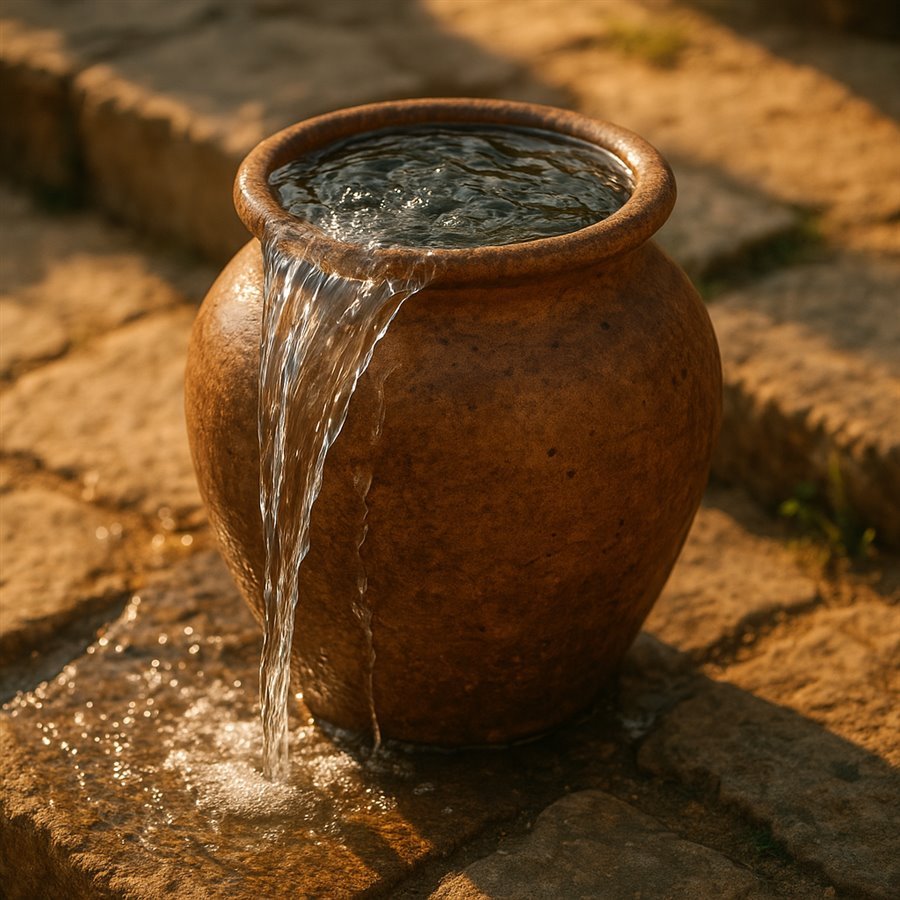
And the words at the end are big on purpose: unfailing love, full redemption, all their sins. This isn't a measured forgiveness that covers only part and leaves a remainder for you to pay. It's "full," more than fits. The Psalm that started at the bottom of the well ends with a jar overflowing, water running over the rim.
Eight verses. It started crying out, it ended overflowing. That's the path we climbed this week, one step a day. And the question left for today is simple: who is your water going to overflow onto?
How to pray with it today
Today, pray for someone you know is in the depths. Put that person's name into verse 7: "[Name], put your hope in the Lord, for with the Lord is unfailing love." If you can, send them a message today. You don't need to quote the Psalm. You only need to come close.
A short prayer
Lord, thank you that your redemption is full, more than fits in me. I don't want to keep it to myself. Let it overflow onto the people close to me, starting with [Name]. Amen.
To keep today
The hope you received from down below isn't for keeping. It's for overflowing.