John 15:1-5, the Vine and the Brancheswhat it means, verse by verse
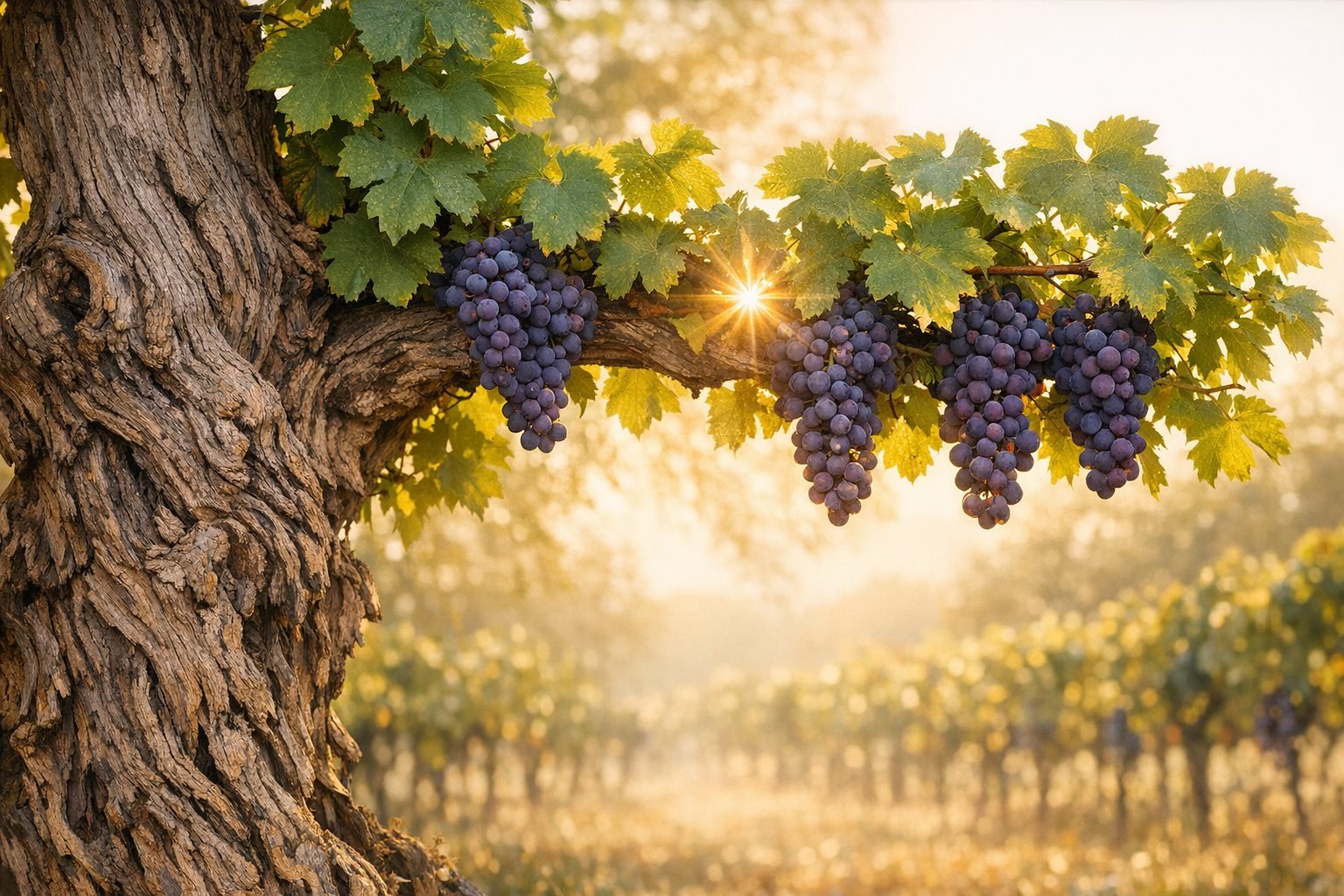
On the coverThe ancient trunk on the left is verse 5: "I am the vine; you are the branches". The branch growing out of it, heavy with grapes, is what happens to whoever stays connected: "you will bear much fruit". And the sun shining through the leaves is the care of verse 1: "my Father is the gardener". No one in the photo. The branch could be you.
It was the last night before the cross. Jesus had just had dinner with His friends, He had washed their feet, and He knew that in a few hours they would scatter in fear. What does He choose to say at a time like this? Not a list of rules. A simple image that anyone in that land understood: a vine. "I am the true vine." Let's open the first five verses of John 15 slowly, one by one, in simple language.
One thing helps us understand it all: in the Bible, the vine (or the vineyard) was a well-known image of God's people. The prophets used this picture, as in Isaiah 5. When Jesus says "I am the true vine", He is saying that the life the people were looking for is in Him. And the rest of the text shows how that life reaches us: through the connection.
Verse 1 — The true vine
"I am the true vine, and my Father is the gardener." John 15:1
"True" makes us think of the opposite: there are vines that look the part but don't give life. We hang on to many things thinking they will sustain us: work, approval, control, relationships. All of these have their place, but none of them has sap. Only one vine is the true one.
And the verse ends with rest: "my Father is the gardener". You are not the one who has to care for your own plant alone. There is a Father who knows every branch, who knows the season for rain and the season for sun. Jesus is the vine, the Father is the one who tends it, and you are the branch.
Verse 2 — The gardener's care
"He cuts off every branch in me that bears no fruit, while every branch that does bear fruit he prunes so that it will be even more fruitful." John 15:2
This verse shows the gardener's two hands. The first cuts off the branch that bears no fruit. The second prunes the one that bears fruit, so that it will be even more fruitful. Pruning is such a big subject that it will get a whole week just for itself, week 2 of Abide.
For now, hold on to this: on the vine, even the cut is care. Anyone who has seen a pruned grapevine knows it looks poorer for a while, and then comes back fuller. The gardener doesn't cut out of anger. He cuts because he wants fruit.
Verse 3 — Clean because of the word
"You are already clean because of the word I have spoken to you." John 15:3
Notice the "already". Jesus is talking to men full of failures: one was about to deny Him, others were about to run away. And even so He says: you are already clean. Not by their own merit, but "because of the word I have spoken to you". What makes clean is His word, not the effort of the one who listens.
This changes the way we come close to God. You don't need to be perfect to remain. You remain because He has already spoken a word of care over you, and He keeps speaking it every time you open the Bible.
Verse 4 — Remain in me
"Remain in me, as I also remain in you. No branch can bear fruit by itself; it must remain in the vine. Neither can you bear fruit unless you remain in me." John 15:4
This is the heart of the text. "Remain in me" is an invitation to stay, like someone who lives in a place, not like someone who visits. And the connection has two sides: "as I also remain in you". It's not only you who stays in Him. He stays in you. On the days you forget to pray, He has not forgotten you.
The second half is a truth anyone who knows the field understands: a cut-off branch bears no grapes. It may be the most beautiful branch, but separated from the vine it produces nothing. The fruit (love, peace, patience) is not something we manufacture by sheer strength. It is something that grows in whoever is connected.
Verse 5 — Much fruit, or nothing
"I am the vine; you are the branches. If you remain in me and I in you, you will bear much fruit; apart from me you can do nothing." John 15:5
Jesus repeats the image, now making clear who is who: "I am the vine; you are the branches". And He puts two phrases side by side: "you will bear much fruit" and "apart from me you can do nothing". The same connection that, when it exists, produces much, when it's missing, produces nothing. The problem was never the size of the branch. It was always the connection.
The words "apart from me you can do nothing" may sound harsh, but it is a relief. No one expects you to be enough on your own. Not even Jesus expects that. The invitation isn't "try harder". It's "stay close".
What John 15:1-5 promises — and what it doesn't
It doesn't promise a life without dryness, without pruning or without hard days. The text itself speaks of cutting and of cleansing. And it doesn't replace concrete care: if tiredness or sadness is weighing too heavily, talking to someone you trust or to a professional is also God's care.
It promises three firm things: that there is a true vine, and it has sap for you; that the connection has two sides, and His side never fails; and that whoever stays close bears fruit, in the right time, like grapes that ripen slowly.
A small practice to take from this reading: choose three ordinary moments in your day and, in each one, say silently: "Jesus, I remain in You." A little and always. That's how the sap flows.
Questions that come up here
When did Jesus say "I am the true vine"?
On the last night before the crucifixion, after the Last Supper, in a long conversation with the disciples that runs from John 13 to John 17. It is one of Jesus' most intimate talks in the Gospel of John, given when He knew He was about to leave.
What does it mean to "remain" in Jesus?
It means staying connected to Him continually, the way the branch is on the vine. In practice, it's coming back to Him throughout the day: prayer, the Word, trust in ordinary hours. Verse 4 says "Remain in me, as I also remain in you": the connection has two sides, and Jesus also remains in us.
Who is the gardener in John 15?
The text itself answers: "my Father is the gardener" (John 15:1). Jesus is the vine, God the Father is the one who tends it, and the disciples are the branches. The gardener is the one who cuts off, cleans and prunes, always so that the plant will bear more fruit.
Does "apart from me you can do nothing" mean I can't do anything on my own?
Jesus is talking about fruit, not about everyday tasks. The fruit that lasts, like real love, peace and patience, grows out of the connection with Him. The phrase is not an accusation: it's an invitation to stop trying to be enough on your own and to stay close to the One who is the vine.
To carry in your pocket today
Jesus is the true vine, and the Father cares for every branch. No one bears fruit by sheer strength: the fruit grows in whoever stays connected.
A short prayer
Jesus, You are the true vine. I want to remain in You, and I know You remain in me. Teach me to remain, a little each day. Amen.